
Inside 24 Hours At The VIS Control Room: What We Do When The Alarm Sounds
Here we take you through what could happen during a security breach on your construction site. Our team works to protect your site and our fast reaction is what does just that.
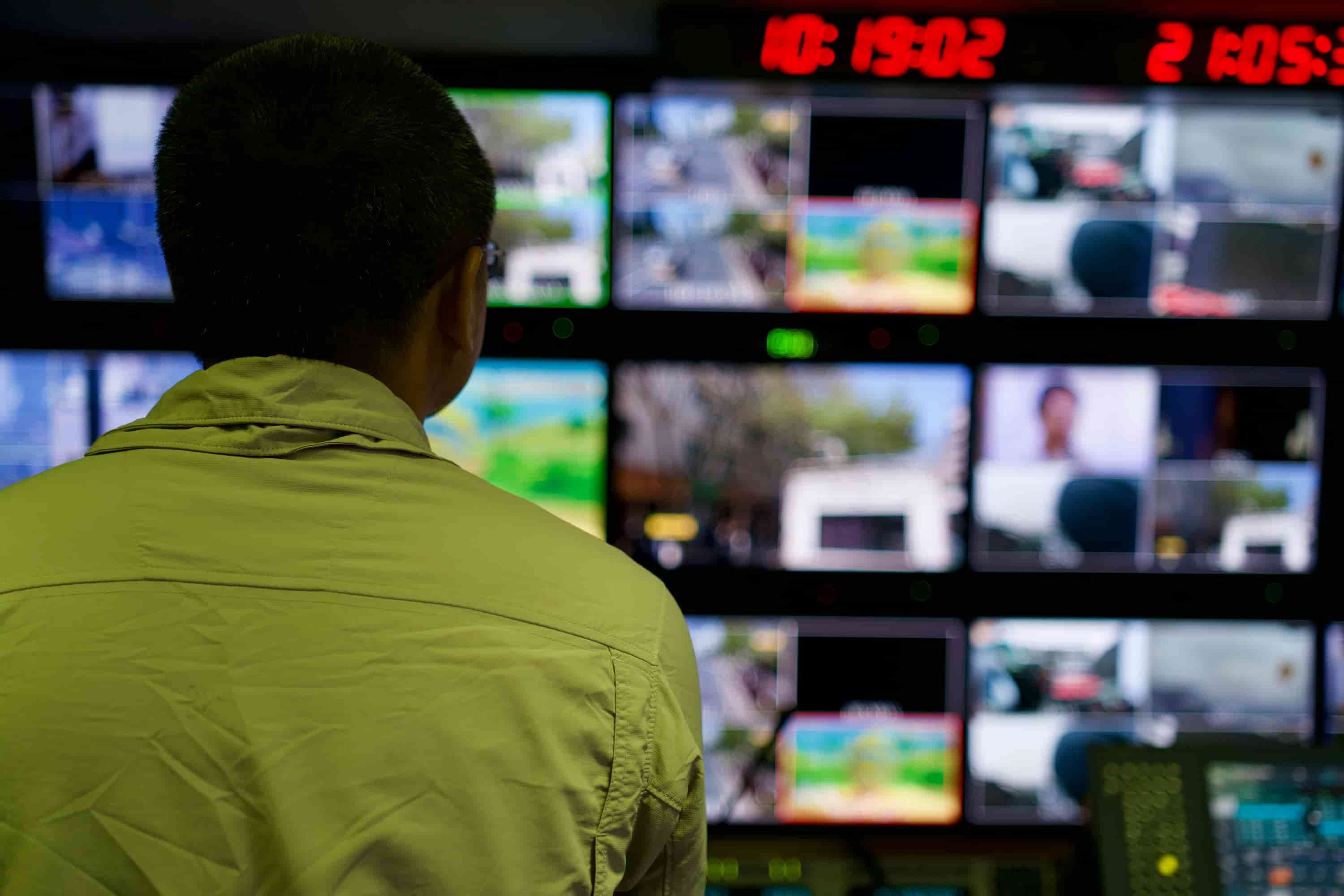
Here we take you through what could happen during a security breach on your construction site. Our team works to protect your site and it's our fast reaction that allows us to do just that.
Find out how we can secure your construction site and see for yourself what to expect from us if a breach does take place.
The Breach: The ins and outs of security reactions during a security breach
02:13 AM. East Manchester
During the early hours of the morning, a time when crime is often at its peak, a thermal camera mounted to one of our solar-powered CCTV towers picks up movement near the perimeter fencing of a live construction site.
The first step…
The AI layer flags unusual behavioural activity instantly.; this reveals two figures entering from a non-access route, lingering near stored materials rather than moving through the site with purpose.
Inside the VIS control room, the alert is already live before the individuals reach the compound.
The key point of security…
Ultimately, this can be the point in which most construction security systems fail, and this is because cameras alone do not stop intruders.
And equally, a monitoring operative staring at static screens for a 12-hour night shift without intelligent filtering is relying on human endurance more than effective security.
At the time of the breach, the AI identifies, the operators verify and the system reacts as one.
This is what a typical 24-hour cycle inside the VIS control room looks like on a live Manchester construction site.
06:00 The Site Opens Before Workers Arrive
Long before the first contractors arrive, the control room is already active, ensuring the site is running safely.
Every live site connected to VIS is monitored through a combination of:
- AI-powered CCTV analytics
- Facial recognition access control
- Thermal and motion detection
- Intelligent event filtering
- Human verification by trained operators
The first task of the morning is checking overnight incidents, access logs, and behavioural alerts generated during the night shift.
This is where smart AI monitoring matters, as most sites generate hundreds, sometimes even thousands of data points every evening.
Yet, much of this is completely unnecessary, as it equates to wind, wildlife, lighting changes., delivery vehicles arriving early or many other false alarm triggers.
Thus, without AI filtering, operators waste time chasing false alarms. Therefore, the VIS model combines both.
Operators are not replacing the technology, and the technology is not replacing the operators, the two layers exist to strengthen each other.
07:15 Facial Recognition Access Control begins site management
As contractors begin arriving, facial recognition access control systems start processing workers entering the site, utilising this means the system knows who is authorised to access the development, which subcontractor they belong to and arguably most importantly, whether they are attempting to access restricted areas.
"What makes this different from traditional access systems?"
They often fall short on security measures as they rely on:
- Shared fobs
- Temporary codes
- Manual sign-in sheets
- Security guards recognising faces from memory
On a large-scale development, that leaves too much room for error.
A delivery at 7:30 AM may be legitimate, while an access attempt at 2:47 AM usually is not.
10:40 AI PPE Detection Flags a Safety Breach
Late in the morning, one of the AI-enabled cameras identifies a worker entering a monitored zone without the required PPE.
The behavioural analytics system detects:
- Missing hard hat
- No high-visibility clothing
- Unsafe movement near restricted machinery
The alert is escalated directly into the control room, rather than seeing the incident later when it is too late.
During this time, operators verify the incident and follow the agreed escalation procedure with site management.
VIS Systems operators review incidents as they happen, filtering genuine risks from unnecessary escalations; the objective is not necessarily more alerts, it is better escalation prospects.
14:20 Intelligent Search Cuts Investigation Time
It is no secret that construction sites are busy environments, hundreds of contractors, deliveries, and vehicle movements can happen across a single day.
That is why when incidents occur, time matters, thus instead of manually reviewing hours of footage, intelligent search tools allow the control room team to rapidly locate events using behavioural markers and object recognition.
For example:
- A white van entering a restricted zone
- Movement along a perimeter edge
- Individuals gathering near stored equipment
- Activity in dormant areas of the site
This drastically reduces investigation times and allows the monitoring team to respond proactively rather than reactively.
18:30 Solar CCTV Towers Take Over the Site Perimeter
As the sun sets, site vulnerabilities change as ultimately, blind spots become more dangerous and prone to the likes of theft or trespassing.
This is where solar-powered CCTV towers become critical.
Solar CCTV towers allow coverage to extend into these areas without relying on fixed power infrastructure, plus importantly, they allow monitoring continuity as sites evolve.
Construction projects are not static environments, so security systems cannot be static either.
By integrating mobile solar-powered towers into the wider monitoring ecosystem, the control room maintains visibility across the full development rather than isolated sections of it.
02:13 AM The Alarm Sounds
The overnight alert appears instantly across the control room dashboard through thermal detection.
It is a perimeter breach and a behavioural anomaly, this means that the AI layer has already prioritised the incident before the operator reviews it. Within seconds, the monitoring operative:
- Verifies the intrusion visually
- Confirms the route of entry
- Checks whether any authorised personnel are active on-site
- Tracks movement patterns across connected cameras
- Escalates according to the site response plan
With VIS Systems security in place, audio warnings can be issued remotely and site contacts can be notified immediately.
Police escalation procedures can begin with verified visual information rather than vague alarm activation data.
Why We Brought Remote Monitoring In House During 2020
In 2020, we at VIS Systems made the decision to bring monitoring fully in-house rather than outsourcing it.
When AI systems, CCTV infrastructure, and monitoring teams are disconnected across multiple providers, gaps appear in the form of…
- Delays in escalation
- Inconsistent responses
- Poor system understanding
- Limited accountability
- Slower adaptation to live incidents
An integrated security operation fills said gaps, and the skilled operators understand the systems because they work directly with them every day.
Plus, when incidents happen, decisions are made inside one connected operational structure rather than being passed between disconnected companies.
The good news is, with VIS Systems, you’re able to obtain a full scale security system that offers a combination of various security products for a well rounded approach to keeping your site and workforce safe.
It hits every corner so you can rest assured you’re doing everything in your power to keep your construction site on track and in safe hands.
Talk to Us at VIS Systems Today
We are proud to have intercepted breaches while continuing to keep workforce monitoring at optimal capabilities.
We secure construction sites all over the UK, we are constantly developing and looking for gaps that could leave your site vulnerable and address them accordingly.
If you want a security team with this level of proactiveness, get in touch with our team today to find out how we can help.

What contractors use their time lapse footage for

VIS Systems shortlisted three times at the Building Innovation Awards 2026
